
COROLLA → OCRACOKE
Outer Banks Surf Fishing
Surf fishing on the Outer Banks is best in spring and fall, along more than 100 miles of beach from Corolla to Ocracoke. This is the guide: where to fish, when to go, what you’ll catch, how to rig up, and the license and permit rules, with live water temperatures.
Corolla to Ocracoke
The Outer Banks Surf Fishing Map
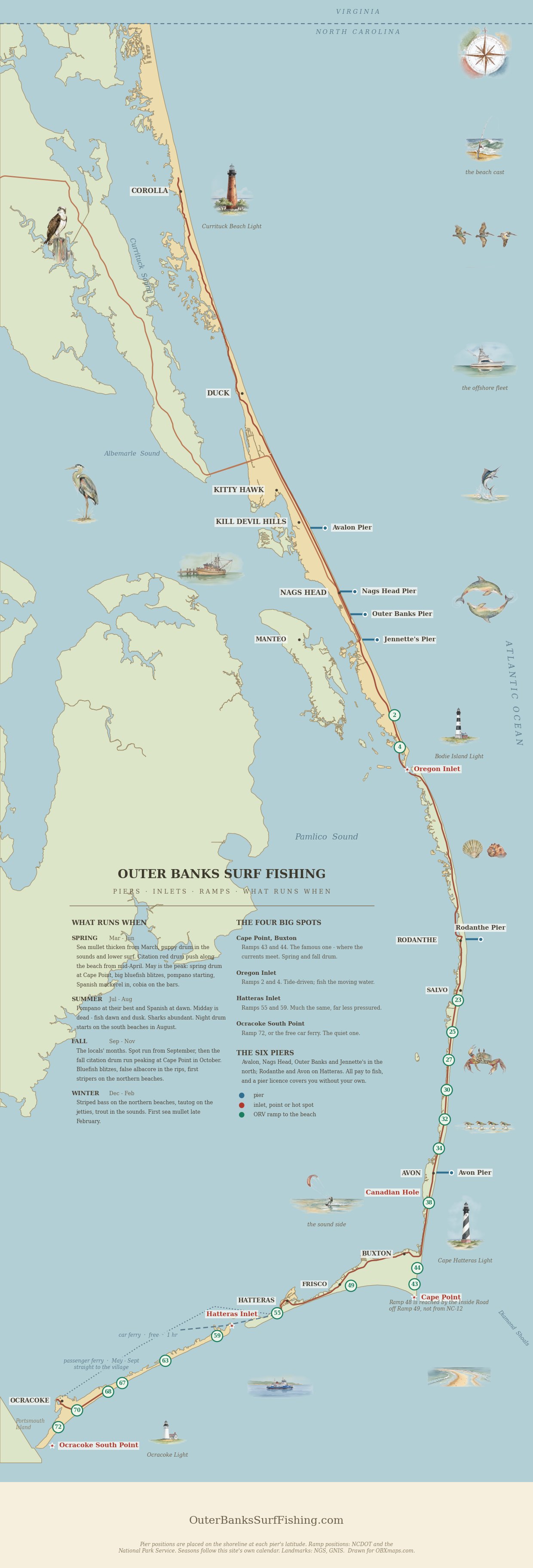
Every ocean pier, the four big spots and all twenty designated ORV ramps that reach the ocean beach — plus what runs when. Tap anything on the map to jump to its guide.
Or pick a spot from the list
- How to surf fish the Outer Banks
- Surf conditions
- The Outer Banks fishing report
- What you can catch
- Shelling the Outer Banks
- Avon and Canadian Hole
- Cape Hatteras surf fishing
- The Hatteras to Ocracoke ferry
- Currituck Beach Lighthouse
- Ocracoke Island
- Avalon Pier
- Ramp 2
- Ramp 4
- Ramp 23
- Ramp 25
- Ramp 27
- Ramp 30
- Ramp 32
- Ramp 34
- Ramp 38
- Ramp 44
- Ramp 43
- Ramp 48
- Ramp 49
- Ramp 55
- Ramp 59
- Ramp 63
- Ramp 67
- Ramp 68
- Ramp 70
- Ramp 72
- Oregon Inlet
- Hatteras Inlet
- Canadian Hole
- The month-by-month calendar
THE GUIDE
Outer Banks surf fishing in six answers
Where, when, what, how, the rules, and getting on the sand. Each one links to the full guide.
Where to surf fish on the Outer Banks
The coast breaks into three pieces. The northern beaches from Corolla to Nags Head are town beaches with the six ocean piers and walk-on access from every beach road; driving on them is an off-season thing. Hatteras Island is Cape Hatteras National Seashore, where the ramps put a 4x4 on the sand at Oregon Inlet, Avon, Cape Point, Frisco and Hatteras Inlet. Ocracoke is the quiet end, a ferry ride south.
The four spots people plan trips around are Cape Point at Buxton, Oregon Inlet, Hatteras Inlet and Ocracoke’s South Point, and all four are a drive on the sand rather than a walk. Without a truck, fish a pier or the beach in front of your rental: the fish run the whole coast, and the points just concentrate them.
Read next: Where to surf fish · Cape Point · Oregon Inlet · Cape Hatteras · Corolla and the 4x4 beaches · The six piers
When to go: the Outer Banks surf fishing seasons
Spring and fall. The spring red drum run starts along the beach in mid-April and runs into May, with sea mullet on every beach and the first bluefish blitzes; May is the best all-around month, when pompano, Spanish mackerel and cobia arrive. Summer is dawn-and-dusk fishing: pompano and Spanish at first light, hot water and slow fishing at midday.
Fall is the main event. September is the locals’ month, with the mullet run, the spot run and the first fall drum. October brings the citation drum run at Cape Point, big bluefish and false albacore. November trades the drum for striped bass on the northern beaches, and winter is stripers from Duck to Corolla on calm days, with not much else on the ocean side.
Read next: The month-by-month calendar · September · October · November · What’s biting now · Tournaments
What you’ll catch
Red drum are the fish this coast is known for, from puppy drum in the sloughs to the citation-size bulls at Cape Point in spring and fall. Around them run bluefish, sea mullet, spot, croaker, pompano, Spanish mackerel, speckled trout, black drum and flounder, with striped bass on the northern beaches in the cold months. Sharks are there for anyone soaking a big bait after dark.
Most of it comes on a bottom rig baited with shrimp, bloodworms or Fishbites. The drum take cut mullet on a fish finder rig, and the mackerel and blues want metal. Each species guide covers what the fish eats, when it runs, and the size and bag limits.
Read next: What to catch · Red drum · Bluefish · Pompano · Spot · Striped bass · Sharks
How to surf fish here: rigs, bait and reading the beach
Five rigs cover everything on this coast: the fish finder for drum and anything else that eats cut bait, the double-drop bottom rig for spot, croaker, sea mullet and pompano, the hi-lo, the fireball for the drum crowd at Cape Point, and the pompano rig. A long surf rod that can put a heavy sinker out past the bar into the wind handles the ocean side; a lighter spinning outfit covers the piers, the sound and the mackerel.
Bait beats lures most days: sand fleas and shrimp for pompano and sea mullet, bloodworms or Fishbites for spot and croaker, fresh cut mullet for drum and blues. Then read the beach. Fish the sloughs (the deeper troughs between the sandbars), the cuts where water drains off the bar, and the moving water around high tide, and in summer go at dawn, dusk or at night.
Read next: How to surf fish · The five rigs · Bait · Lures · Reading the tide · Night fishing · Gear
The rules: license, permits and limits
Anyone 16 or older needs a North Carolina Coastal Recreational Fishing License to fish from the beach, the sound or an inlet; a licensed ocean pier covers you while you are on it. To drive onto the beach at Cape Hatteras National Seashore you need the National Park Service ORV permit, $50 for 10 days or $120 for a year, and the required gear in the truck: a shovel, a jack with a support board, and a low-pressure tire gauge. Ramps run posted daytime hours from May 1 through November 15 for nesting shorebirds and sea turtles, and the move back to 24-hour driving starts September 15 as turtle nests clear. Hours differ ramp to ramp, so check the Park Service hours page before you go.
The northern towns run their own beach-driving seasons in the cooler months (Nags Head’s is October 1 through April 30), and Currituck County requires a permit to park on the Carova beach from mid-May through late September. Limits: red drum 18 to 27 inches, one per person per day; flounder has a short season each year; most everything else has a bag limit. North Carolina changes its rules by proclamation, so check before you keep a fish.
Read next: Fishing license · ORV permit · What’s legal where · Limits and closures
Getting on the sand: with a 4x4 or without one
You do not need a truck to surf fish the Outer Banks. Every town beach from Corolla to Nags Head has walk-on access, Coquina Beach on Bodie Island has parking and a bathhouse a boardwalk away from the water, and the six piers put you over deeper water than any cast from the beach. What a 4x4 buys you is the points and inlets: Cape Point, Oregon Inlet, Hatteras Inlet, South Point and the Carova beach, all miles from the nearest pavement.
Read next: Coquina Beach · Duck, Kitty Hawk and the northern beaches · Where to rent gear · The sound side
Live OBX Water Temperatures
Real-time water temps from three NOAA stations. Note how much the readings differ between the north beaches and points south of Cape Hatteras.
High: 10:55 AM
Updated: Sep 15, 6:31 AM · Source: NOAA Tides & Currents · Full conditions →
WHY OBX TEMPS VARY
Why OBX water temps vary so much
Cape Hatteras is the meeting point of two opposing currents. The cold Labrador Current pushes south down the mid-Atlantic shelf. The warm Gulf Stream runs north from the Florida Straits, then peels east at the Cape. The collision zone sits right off Diamond Shoals.
That is why a thermometer at Duck can read in the low 60s while Hatteras — about 75 miles south — reads near 80. North of the Cape you are in shelf water cooled by the Labrador influence. South of the Cape you are in Gulf Stream-tempered water. The Sound side warms even faster because it is shallow, semi-enclosed, and bakes in the sun.
For surf fishing this matters more than the calendar. Striped bass push south in the cold pocket north of the Cape. Red drum and Spanish mackerel show first in the warm water south of it. Cobia ride the Gulf Stream eddies. The same week, you can be fishing winter and summer fish 60 miles apart.
Rule of thumb: when you see a 10°+ spread between Duck and Hatteras, the front is sharp and the bite splits cleanly north vs south of Oregon Inlet.
Right now on the beach
January is the quietest month on the beach: water in the high 40s to low 50s and most of the warm-water fish gone south. It is striped bass season — fish the cuts and sloughs at first and last light around Oregon Inlet, the Point and the Avon–Buxton beaches — with black drum and sea mullet on shrimp as the background bite.
January on the OBX → · Striped bass guide · Black drum guide
February is the bottom of the temperature curve, mid-40s most of the month. Holdover stripers push into the suds on bait runs, mostly in the first two weeks, and sea mullet on a two-hook bottom rig with shrimp are the most reliable catch there is.
February on the OBX → · Striped bass guide · Sea mullet guide
March is the turn. The first half still fishes like February; by the last week sea mullet are stacked on the inside bar, the first puppy drum are working the wash and the bluefish run is about to break. Carry a measuring board — those puppy drum are exactly slot size, 18 to 27 inches.
April is when the beach comes alive: slot reds stacked in the wash on rising tides, the big-blue run chasing bait through the suds, trout showing in the inlet mouths and big spawning black drum pushing through. Anything over the 27 inch slot goes back.
May is the best all-around month: puppy drum strong through mid-month, Spanish mackerel arriving when the water hits 68°, the first pompano on the southern beaches late in the month and the pier cobia sight-fishery at its peak.
June is the switch to summer: pompano cruising the inside bar for sand fleas, Spanish mackerel in the first hour of light, snapper blues thick in the suds and the drum bite pushed to early morning and dusk.
July is a dawn and after-dark game — the people fishing at noon are the ones not catching. Pompano on Hatteras and Ocracoke, Spanish from the piers, sharks after dark and the first tarpon around the inlets late in the month.
August has the warmest water of the year, and fall starts in its last ten days: the first finger-mullet schools push south along the beach, the big blues wake up and the first bull drum show at Cape Point. Every red over 27 inches goes back, and circle hooks are the smart choice with natural bait — they catch in the jaw instead of the gut.
The 2026 flounder season is September 1–14, and that is the whole season. 15 inch minimum, one fish per person per day. Outside those fourteen days it is catch and release.
The mullet run is on, bull drum are stacking at Cape Point, and the spot run builds through the month on the first hard northeast blow.
October is September with cooler water and fewer people: bull drum still at peak at Cape Point, the spot run firing on the first hard northeast blows, chopper blues in the wash and false albacore for the light-tackle crowd. Spanish hang on until the water drops below 68°, usually mid-to-late month, and flounder is catch and release for the rest of the year.
November is the changing of the guard: the big drum push fades, the albies leave and the striper run is on — 30 to 40 pound fish are realistic from the surf on bunker chunks at dawn and dusk. Spot linger through the first half of the month, specks show in the inlets and the beaches go almost empty.
November on the OBX → · Striped bass guide · Speckled trout guide
December is striper season on an empty beach. The big fish are here, mostly in the first half of the month before the water drops below 50°, with black drum and sea mullet around structure for the bottom rods. Dress for wind chill in the 20s, and check the season before you keep one.
December on the OBX → · Striped bass guide · Black drum guide
Tournaments
Outer Banks surf fishing tournaments: 2026 dates and how to enter →



Logos belong to the clubs and tournaments and link to their own pages.
START HERE
Start Here
If you read nothing else, read these.
Fishing Conditions
What’s likely biting right now.
By Month
What’s catchable when.
ORV Permit
How to drive on Cape Hatteras NS beaches.
Fishing License
What you need and where to buy it.
Outer Banks surf fishing basics
- The best surf fishing on the Outer Banks is in spring and fall, when migrating fish move close to the beach.
- Anglers 16 and older need a North Carolina Coastal Recreational Fishing License to fish from the beach. A licensed pier covers you while you fish from it.
- Driving onto the beach at Cape Hatteras National Seashore takes a National Park Service ORV permit: $50 for 10 days or $120 for a year.
- Red drum must measure 18 to 27 inches to keep, one per person per day.
- Cape Point near Buxton is the best-known spot on the coast, close to where the Labrador Current and the Gulf Stream meet off Diamond Shoals.
Pier, walk-on beach or drive-on beach?
Pick a pier for your first day or with kids, a walk-on beach when you are staying in a rental without a 4x4, and a drive-on beach to reach the points and inlets.
| Ocean pier | Walk-on beach | Drive-on beach | |
|---|---|---|---|
| Cost | A daily pier fee, which varies by pier | Free | Free to fish; at Cape Hatteras National Seashore the ORV permit is $50 for 10 days or $120 a year |
| Fishing license | Covered when the pier holds a license; ask at the pier house | Your own NC Coastal Recreational Fishing License at 16 and older | Your own NC Coastal Recreational Fishing License at 16 and older |
| Best for | Beginners, families and deeper water past the sandbars | A quick session from a rental | Reaching the points and inlets, like Cape Point and Oregon Inlet |
When is the best time to surf fish the Outer Banks?
Spring and fall. Fish move close to the beach from about April through June, and again from September into November. Summer fishing is slower in the heat of the day, and our month-by-month calendar covers what is biting when. See the surf fishing calendar.
Do you need a fishing license to surf fish in North Carolina?
Yes, if you are 16 or older. You need a North Carolina Coastal Recreational Fishing License to fish from the beach, the sound or an inlet. Fishing from a licensed ocean pier is the exception, because the pier license covers you. See the fishing license guide.
Do I need a permit to drive on the beach to fish?
At Cape Hatteras National Seashore, yes: a National Park Service ORV permit, $50 for 10 days or $120 for a year. The Carova 4x4 beach north of Corolla needs no permit to drive, but Currituck County requires a permit to park on the sand from mid-May through late September. See the ORV permit guide.
Where is the best surf fishing on the Outer Banks?
Cape Point near Buxton is the most famous spot, close to where the Labrador Current and the Gulf Stream meet off Diamond Shoals. Oregon Inlet is another favorite, and the ocean piers from Kill Devil Hills to Avon let you fish without buying a license. See where to fish.
What are the red drum size limits in North Carolina?
Red drum must be 18 to 27 inches long to keep, and the limit is one fish per person per day, year-round. Anything outside that slot goes back. North Carolina changes fishing rules by proclamation, so check the current limits before you keep a fish. See the red drum guide.
What can you catch surf fishing on the Outer Banks?
Red drum, bluefish, sea mullet, spot, croaker, pompano, speckled trout and striped bass all come through the surf, depending on the season. Our what-to-catch guide shows each fish and when it runs. See what to catch.
GUIDES
Guides & Reports
Guides, how-tos, and ramp-by-ramp notes for fishing the Outer Banks.
Little Bridge Fishing Report & Guide (Nags Head Causeway)
The Little Bridge is the Melvin Daniels Bridge, the low bridge on the U.S. 64 causeway between Nags Head and Roanoke…
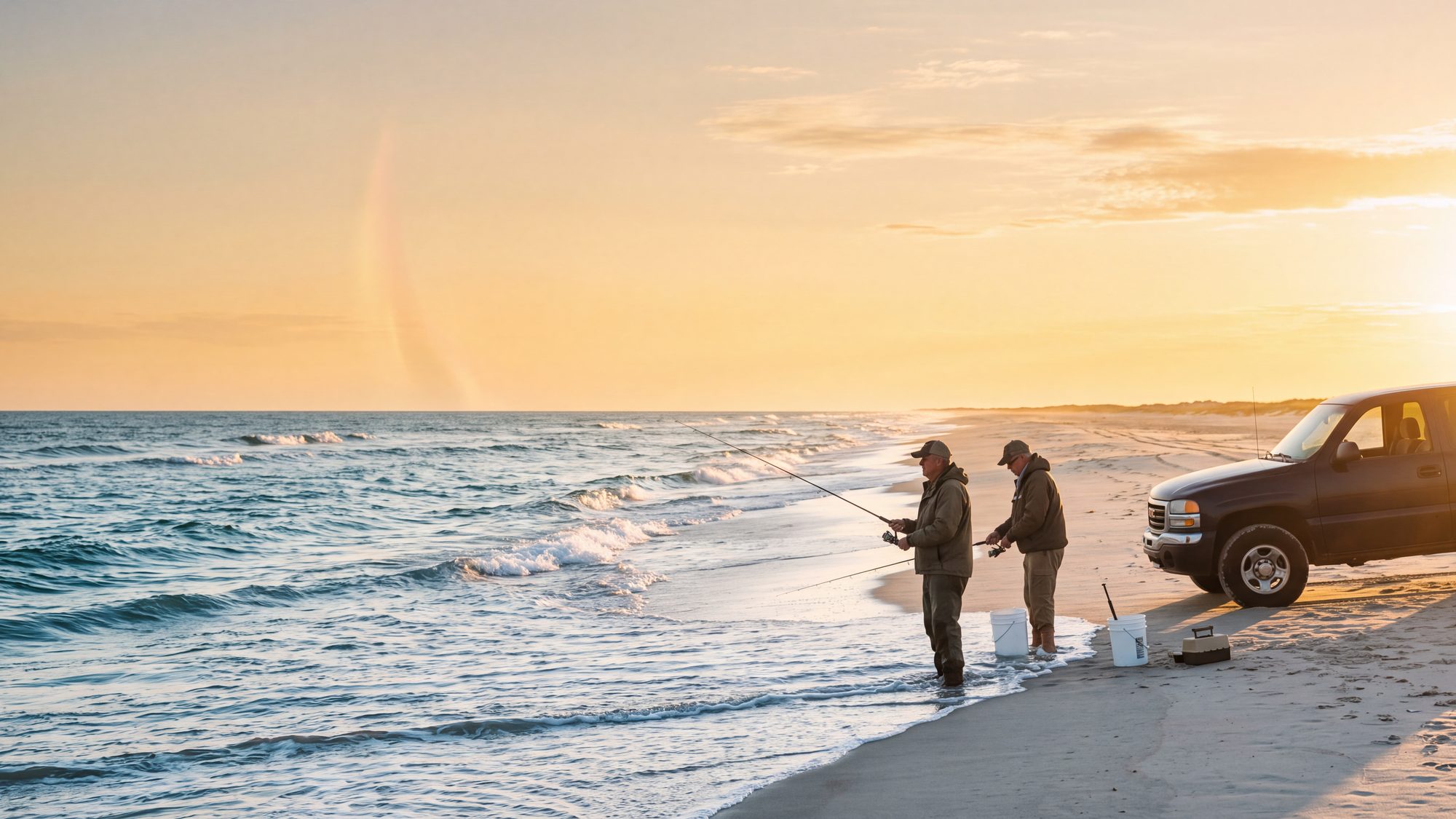
Ocracoke Fishing Report
Ocracoke is the one Outer Banks beach you cannot drive to, and it has one tackle shop writing the report: Tradewinds,…
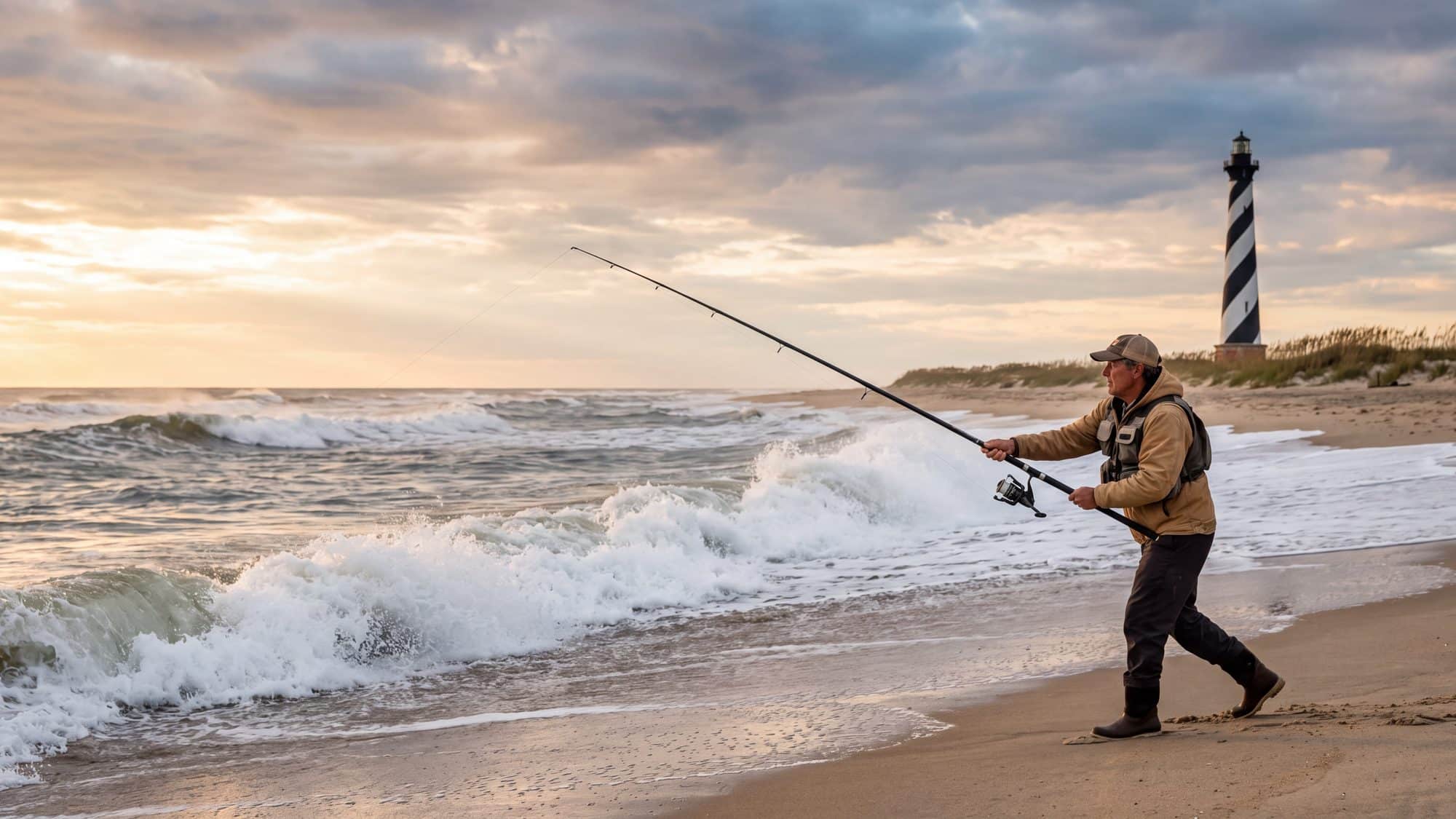
Hatteras Island Fishing Report
Hatteras Island is fifty miles of beach with seven villages, two piers, Cape Point in the middle and more surf-fishing reports per…
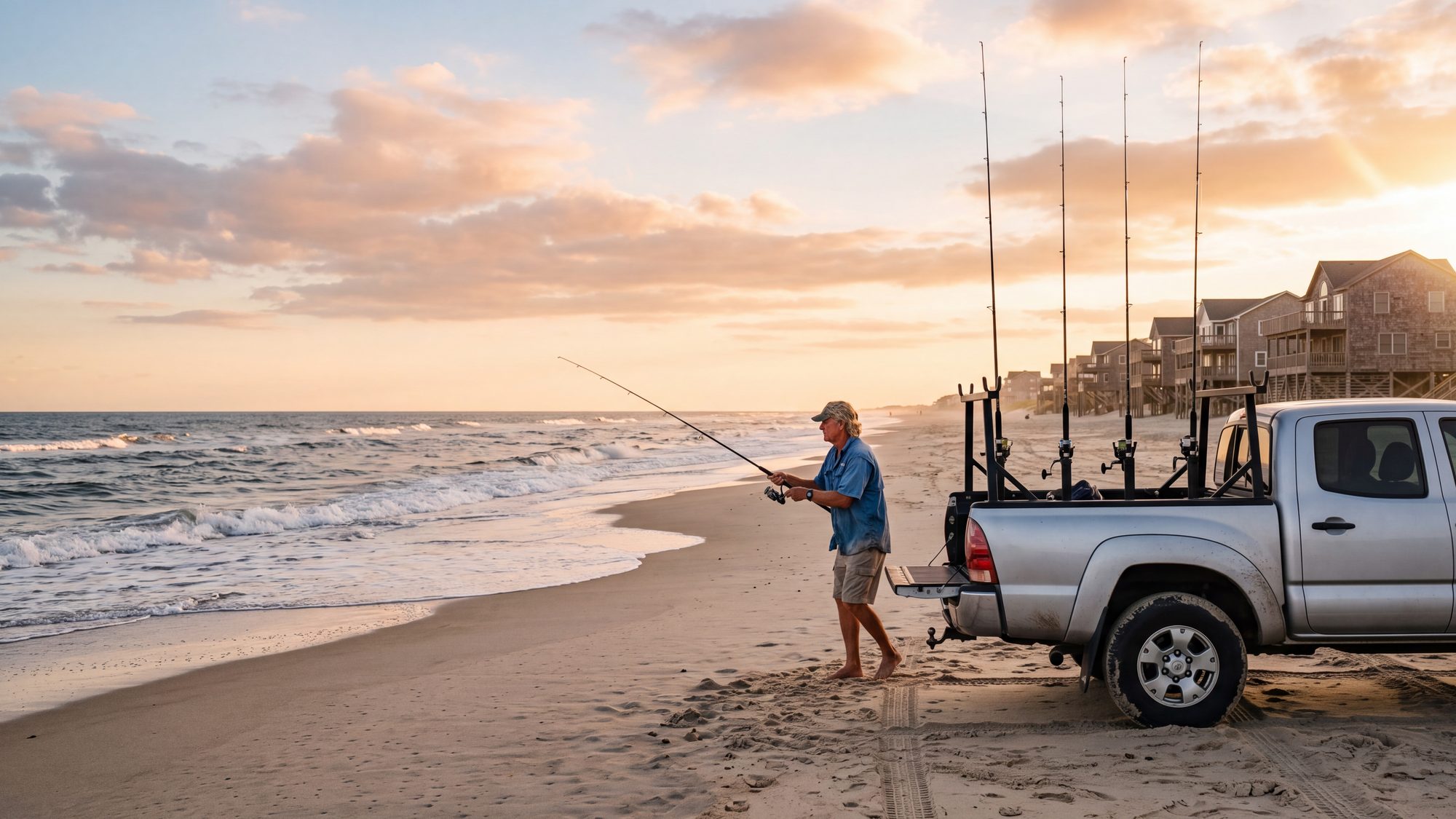
Corolla Fishing Report
Corolla’s fishing splits in two: the walk-on beaches in the village, and the 4x4 beaches north of the pavement that…
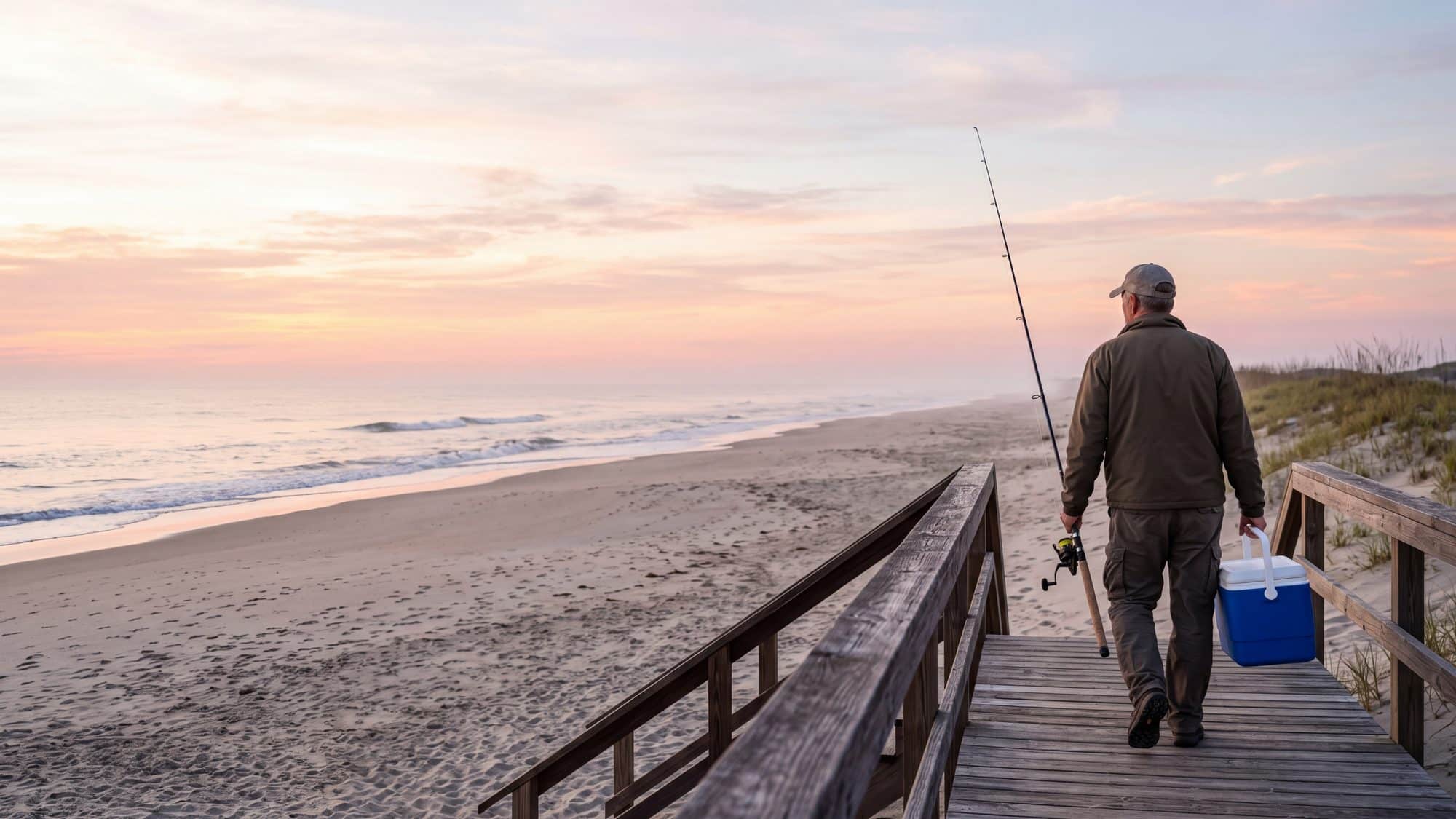
Kitty Hawk & Kill Devil Hills Fishing Report
Kitty Hawk and Kill Devil Hills share one long beach, one working pier and the same water off Duck Pier, which is the…
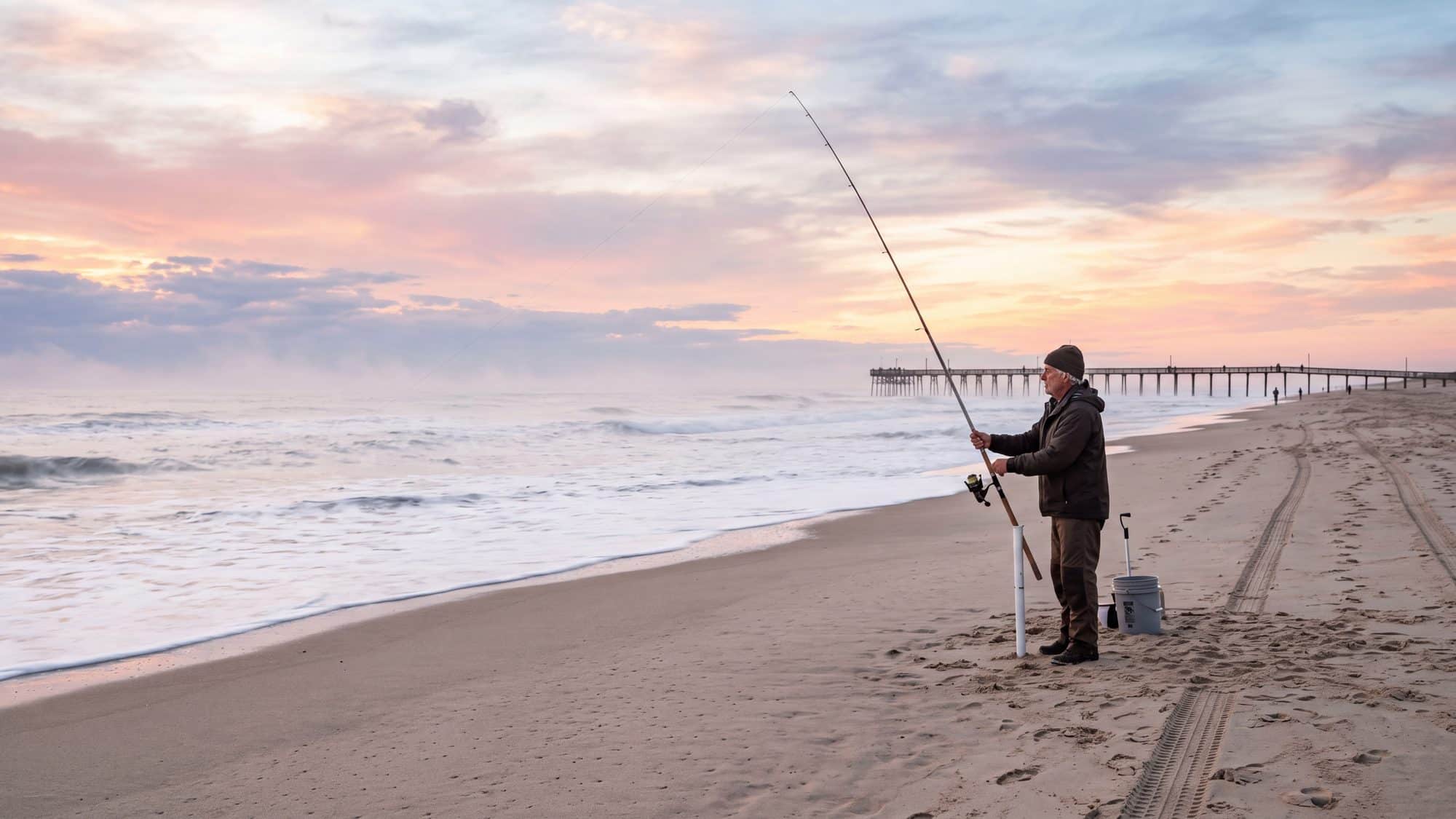
Nags Head Fishing Report
Nags Head has three fishing piers, eleven miles of surf and more people writing daily reports than any other town on…


About this site: who writes it and why.
PLAN YOUR TRIP
Plan Your OBX Fishing Trip
Tide timing makes or breaks a surf session. Line up your trip with these local guides:
OBX Tide Charts ↗
High and low tide times for every Outer Banks station; fish the moving water.
Beach Driving & Permits ↗
Reach remote breaks by driving the sand (permit info inside).
Rent a 4x4 ↗
Haul your gear to the best beaches with a beach-ready Jeep or SUV.